Monday, June 5, 2017

Getting to Tanabe City -- Jump off point for the Kumano Kodo's Nakahechi Route


It took me nearly a year to really plan out how to do the Kumano Kodo and still there were a few things I missed along the way.  If I can get you interested in walking this venerable, time honoured pilgrimage then let me give you a few tips on how to get yourself there.
In planning this trip, I used a local tour operator which simplified everything particularly since most of the reservations had to be made in Japanese.
There are various tour companies specialising in the Kumano Kodo and other hikes in Japan but I chose a community based organisation based in Tanabe City.
I also worked with Mi-Kumano, a local group of  english speaking guides who can likewise help with  accommodations, luggage transfers and tours.  


The Kumano Kodo is in the Kii Peninsula in Wakayama Prefecture -- just a couple of hours away from Kansai International Airport but seemingly worlds and years away.  Landing at KIX is a most convenient way to reach the area.
We chose to walk the parts of the Nakahechi Route which starts at Takijiri.
There are no trains for that area so we had to take a train to Tanabe City and from there, a bus to Takijiri.


The lady at the JR Ticket Counter in KIX was very helpful -- she got us on the Rapid Express headed for Osaka with instructions to get off at Hineno Station, just two stops away.


Hineno station is one of the few stops of the Limited Express Kuroshio,  headed for Tanabe City and beyond.  We barely had time for a photo before our ride pulled into the station.  All aboard!


The Kuroshio Limited Express is a JR train that links Kyoto and Osaka with the towns and cities in Wakayama Prefecture.  We had reserved seats but after Wakayama station where most of the passengers got off, we had the car to ourselves.


The scenery outside my train window alternated between views of mountains, small villages and the waters of the Pacific Ocean.  I wish I had taken views of the coastline as we sped through.


Less than two hours later, we arrived at Kii Tanabe station.  There were a few taxis waiting for passengers but our hotel was just a few blocks walk away.
I thought the station had a quaint slightly European air -- particularly with the cut outs and designs of witches, pigs, farmers and little children.  Had we stumbled into the world of the Brothers Grimm?


Here are the Amigos -- we call ourselves this since most of us had walked the Camino de Santiago together in 2015. 
Tanabe City is a long long way from Santiago de Compostela but here we were again -- ready for another hike, another adventure. 


Hotel Hanaya, our lodgings for the one night we were in Tanabe City was small but clean and personally run by the  hard working owners.
As we checked out the next day, I was surprised to see them cleaning the rooms and taking out the laundry.   It was certainly an efficient "mom and pop" operation.


Hotel Hanaya does not serve dinner -- only breakfast.  Surprisingly, Tanabe City has a lively food scene.  Across the station is an area called Akikoji where there are bars, izakayas, restaurants and cafes.  I didn't know it but we were probably in the Food Capital of Wakayama Prefecture!  
Our innkeeper recommended a place called Ichiyoshi -- a gastro-pub of sorts with an english menu.


Ichiyoshi's food was ichiban oishii!  I had a set dinner of beef and prawns donburi which came with a tasty little pasta salad -- all for just 800 yen!  


The next morning, Day 1 of our walk, Jay and I went to the Tourist Center right beside the train station.
It offers a wealth of information on places to see and things to do in Wakayama Prefecture.  
And since Tanabe City is the starting point for those setting out on the Nakahechi Route, the centre has reams and reams of maps, bus and train timetables, brochures and everything you would need to know to help you along the way.
Right in front of the Center is the bus stop where everyone takes the bus to Takijiri, the gateway to the Kumano Kodo.


The Tourist Centre is staffed by very helpful, English speaking ladies who are only too happy to answer all questions and offer assistance for any last minute pilgrim's needs.  They can also connect you to the network of tourist facilities all throughout the Kii Peninsula  - truly an invaluable resource.


At the Tourist Centre there is a scale model of the various Kumano Kodo routes.  Encircled in red is the first leg of our walk, from Takajiri to Takahara Village.  It looks deceptively short but I always say that looks can be deceiving.  


For the Nakahechi Route, Takijiri is also called the "Gateway into the Sacred Mountains" and the official start of the Kumano Kodo pilgrimage.  The only way to get there is by local bus and this being rural Japan, they are few and far in between.   Make sure that you do not miss your bus!

Lesson Learned -  Tanabe City has a number of places of interest.  Aside from the vibrant food street Akikoji, there is a temple, a shrine and a beach, all within walking distance from the station. 
It's also the birthplace of Aikido.  If you are interested in any of these, it might be good to spend an extra day exploring Tanabe's charms.
SaveSave
SaveSave

Friday, June 2, 2017

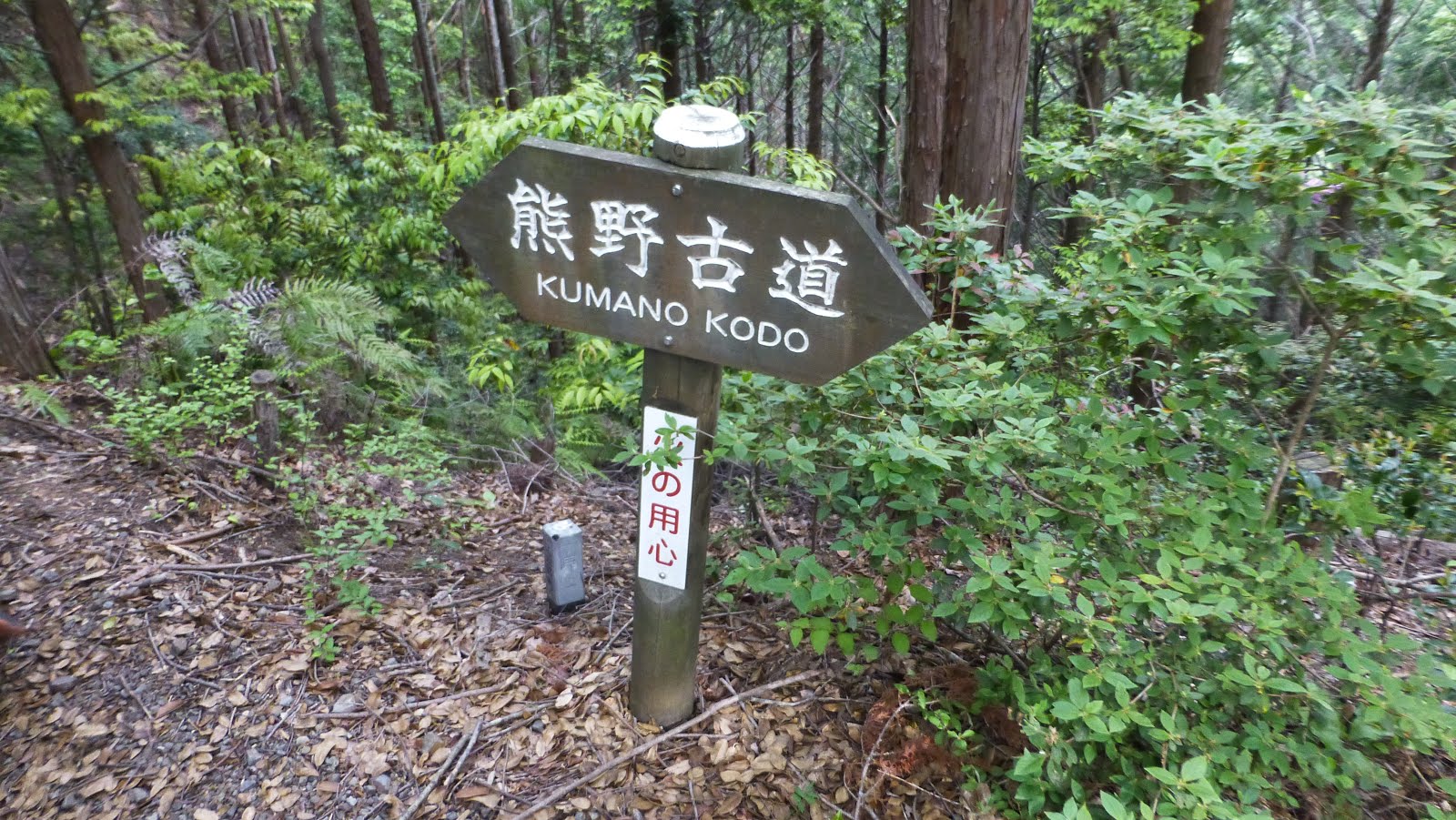
On foot and on the road in hidden Japan - the Kumano Kodo Pilgrimage


I first learned about the Kumano Kodo many, many years ago, when I was reading about Mt Koya 
or Koyasan, the sacred mountain of Shingon Buddhism.  
The article mentioned the mountain was connected to an important Shinto pilgrimage -- the 
Kumano Kodo. 
One of the pilgrimage's five routes that junreisha or pilgrims walked over 1,000 years ago started from Koyasan and ended in the Kii Peninsula where pilgrims visited the three Kumano Shinto shrines. 
I did get to visit Koyasan a few years after I had read about it and found it to be every bit as unique and special an experience as I had expected it to be.


The interest in the Kumano Kodo lay dormant in my mind, temporarily set aside by the busy-ness of business.  When I retired two years ago, it pushed itself forward, nudging me and whispering in my ear.
I have not yet learned to ignore these voices speaking to me. 
So I continued my research in earnest and  discovered that the  Kumano Kodo pilgrimage is one of two pilgrimage routes that enjoys UNESCO World Heritage status -- the other route being the French Way of the Camino de Santiago.  
An amazing coincidence ... in 2015, Jay and I had the privilege of walking the last 134 kilometres of the French Way of the Camino, certainly a life enhancing experience  (I also wrote about it on this blog). 


As I continued to read about the Nakahechi route, my enthusiasm grew  -- the way takes pilgrims off the beaten track, into the small towns and villages of Wakayama Prefecture, winding up and down forests and mountain trails.
It would lead me inside a Japan that few foreigners saw and that perhaps not even too many Japanese venture into. 
If I had known that the Kumano Kodo would also take me through steep, uneven and possibly risky trails (at least for on and off hikers like me)  -- would I have decided to do the trek?
A most resounding yes. Or hai, so desu!  as the Japanese would say. 
So gentle reader --  let me tell you in the next posts about my singular experience of trekking through some of the ancient paths of the Kumano Kodo. 


Wednesday, May 10, 2017

The Amigos' Lucena and Lucban Pre-Pahiyas Excursion -- with a verdant lunch at Isabelito's Garden


Pahiyas in Lucban, Quezon is a colourful celebration of a bountiful harvest and is one of the most famous and oldest festivals in the Philippines.  In honour of San Isidro Labrador it is held every 
year, without fail,  on May 15.
Because of its popularity, the traffic and thick crowds have made it so difficult to attend Pahiyas. 
When the Amigos were planning a quick, day trip to Quezon, we decided that a week before
May 15 would be the perfect time to go and enjoy the town amidst relative peace and quiet.


We left Manila very early to make it just in time for breakfast at Jay's family's home in Lucena, 
two towns before Lucban.


It's convenient to have one of Lucena's best restaurants located right across the house.
We had pre-ordered breakfast from Luisa and Daughter and it was a quite a spread -- garlic fried rice 
and eggs plus longganisang Lucban (Lucban sausages), tender beef tapa (marinated beef),  daing 
na bangus (seasoned milkfish)  and the restaurant's  very own homemade bangus (milkfish) sardines.   


I tried hard not to indulge, as lunch in Lucban was scheduled for just a couple of hours later.  However, it was a losing battle. Thank you to my sister- in -law Vivian for her warm hospitality and for arranging this delicious  meal!


After tarrying over breakfast and conversation, there was a bit of time left for some photos 
around the house. 
Our Jesuit Amigo  posed before this bas relief of the mountains of Monserrat.  This was sculpted by my very creative and artistic father-in-law more than 50 years ago.  He made six of these all along
the concrete wall depicting places in Spain that he and my mother-in-law visited as part of their travels.


One last photo of the Amigos before we got back on the road to Lucban.  The tile mosaic behind us depicts Nuestra SeƱora de Esperanza, Patroness of Seville. 


It was almost noon when we got to Lucban and the first stop was the beautiful stone church of 
San Luis Obispo, in my mind  one of the country's best preserved old Spanish churches. 
First established at the turn of the 16th century, the church has been destroyed and rebuilt a few times.  


This beautiful weathered structure dates back to the 18th century, its most recent reconstruction.  
The beautifully weathered Amigos in front of it are of a more recent edition, dating back to the
20th century. 


From the church, we headed to our lunch destination -- just a hundred or so meters 
away.   I stumbled upon this place on my last solo foray to Lucban and was just so taken with it
that I knew I had to come back -- preferably with friends that I could share this delightful place
with.   It's easy to find ...  take the road that leads out from the church and walk a few blocks till
you see the sign for Deveza Farm. 


Inside this farm right in the centre of town is a lovely little place called Isabelito's Garden.
A small house in middle of a bromeliad nursery has been converted into a rustic restaurant.


The first time I walked through the flowers and the lush greenery, I was captivated. 
I  remember that I found this place on a hot summer day but the temperature seemed 
to drop a few degrees because I was surrounded by so much foliage.


In the evenings this wooden bench must be a lovely place to sit and enjoy an ice cold beer.  But for now, the sun is too hot so we all headed for the cool indoors.


Isabelito's is completely alluring  -- it is impossible not to be taken in by its unpretentious charms.

I had made reservations a week ahead so we were seated in the main dining area.  Isabelito's is not
a very big restaurant but an annex off on one side, closer to the bromeliad nursery can easily handle more guests or even a private party.


Since we had eaten breakfast barely two hours ago, we resolved that we would eat "light".
Not too much, just enough to sample some of the specialties that Isabelito's offers.
This Thai inspired mango salad was tart but had a surprising kick, particularly if you happened to bite into a small piece of bird's eye chili, cleverly hidden amidst the green mango strips.


Isabelito's Garden is not strong on fish or seafood but quite heavy on pork and beef entrees.
One of the few "healthy" dishes on offer is this sinigang na bangus sa miso (milkfish sinigang with miso) which was refreshingly sour.
Did you know that sinigang is one of the best dishes to have on a hot day?
The spicy-sour soup makes you perspire, thus helping bring your body temperature down.


I completely forgot about taking photos before people dug in so please excuse the messy shot of this Pancit Lucban -- an enhanced version of the local habhab.  
Using the same miki noodles that the humble habhab is made with, Isabelito's version has been piled high with pork slices, bits of longganisa, string beans and chicken liver.  
In addition to this, we also ordered the Crunchy Bicol Express, which was very tasty and made with  crackling pork slices cooked in coconut cream -- so malinamnam (tasty)  but oh so unhealthy. 
Forgetting that we had vowed not to eat too much, we also ordered Isabelito's Kare Kare, that came with thinly sliced crisp fried liempo (pork belly) instead of the usual ox tail and tripe. 
Both dishes did not survive long enough for me to take any photos -- mea culpa.


After that LDL-laden lunch,  we tried to cram ourselves into this hanging wooden "frame" -- perhaps we had gained a kilo or two from all the fatty goodness since we could barely squeeze ourselves in.


We needed to walk off some calories so I took the Amigos on a short detour to my favourite panaderia.   I can never go to Lucban without stopping at Pavino's Bakery.  Their thin, melt-in-your-mouth apas cookies are second to none.


We were lucky that the owner,  Ms. Josie Pascua was minding the store.  She very graciously let us in behind the sales counter for a souvenir photo.
Do you see the multi-colored leaf-shaped kiping or rice crackers hanging on top of us -- these are what houses in Lucban will be festooned with on Pahiyas.
But don't think of it as just decor, kiping is very much edible --  when grilled and dusted with sugar, it makes a sweet, crunchy snack.


Lucban is well known for its native hats -- in all colours, designs and shapes, they are the best way to fend off the scorching rays of summer.  Just a week before Pahiyas,  vendors had set up their attractive wares in the streets -- how could we not stop and buy?


Where did the time go?  Before we knew it, it was almost mid afternoon and the Amigos had other places to go and people to see ...
I would have wanted to take them on a more extensive tour of Lucban -- to walk through the small streets,  see the heritage houses, drop in on an indie coffee shop or two but we had to go back to Manila.
Short but sweet, I think the pre-Pahiyas excursion gave the Amigos a glimpse of the small town pleasures of Lucban, ahead of the fiesta chaos and crowds.

Parini ulit sa Lucban, Amigos!


Thanks to Jay for some of the photos used in this post and of course for welcoming us all into their Lucena home. 


SaveSave

Tuesday, May 9, 2017

Ajisoo Japanese / Korean restaurant -- a valuable find at the Cartimar Market


When I was growing up, Cartimar Market in Pasay City was synonymous with expensive imported goods.  Today, it is more known for its many pet stores,  bicycle shops and a high quality wet market.  These past years, it is also where Japanese and Korean restaurants source their authentic, hard to find ingredients and supplies. 


A number of these groceries and mini-marts can be found all in a row on one side of the market.  Right beside them are a few restaurants serving a mix of both Japanese and Korean dishes.  
One such place is Ajisoo -- located right alongside the row of food stores.  After shopping, you can drop by for a casual, appetising meal.


Ajisoo is a simple, no-frills place -- it's clean and the tables are set comfortably apart from each other. 
On this hot day, I was glad their air conditioner was operating at full blast.


Ajisoo is both a Japanese and a Korean restaurant.  Kim bob or korean sushi is offered right beside California maki.  The prices were surprisingly affordable -- which made me want to order just about everything on the menu.


The bento boxes were particularly attractive -- complete with soup and sides, you could have one for as low as P145.


While there are offerings from both cuisines, I noticed a slight skew towards Korean food.  There were also noodle dishes -- I can't imagine how they could sell udon for just one hundred pesos.  
What a great deal!


We finally settled on our orders.  The California maki came on a large platter and had twelve generous slices -- I couldn't help myself and had two before I remembered to take the photo.  
The chef was liberal with the tobiko (fish roe) and the kani slices were fat and firm.   
The mango was sun ripened sweet  and the smudge of  mayonnaise,  Kewpie-smooth and creamy.


I ordered the bibimbap which came sizzling on a stone plate.  The egg was perfectly fried, the beef was tender and the vegetables were crisp and well seasoned.  The kimchi was definitely home made and one of the best I had ever tasted.  I mixed everything with a large dollop of the piquant gochujang
the ubiquitous Korean chili paste. 


We also ordered a sashimi bento that came with six firm and fresh slices of tuna and salmon, plus 
a small salad of julienned cabbage with a drizzle of more Kewpie mayonnaise.  There were two pieces of a garlicky gyoza, a spoonful of potato salad and some vegetables steamed with sesame oil .  
This bento set cost just P195  -- how can you say no to that?


While there are no desserts offered, a small freezer by the cashier is well stocked with Korean ice cream bars.  You are more than welcome to browse and reach in for your choice.


This chocolate ice cream sandwich was light and the cake was spongy and not too sweet.  
Best of all, it was just P45!  
From appetiser to entree to dessert, this place is truly well worth a visit.  
After a shopping spree at Cartimar Market,  you'll have more than enough left over for an honest-to- goodness Japanese / Korean meal at Ajisoo.
Anyeong haseyo! Irrashai mase!
SaveSave

Wednesday, April 19, 2017

A Happy Meal at Happy Delicious Kitchen in Binondo


In Binondo on a weekday shopping errand, I decided to look for a restaurant that I had not been to before.  Luckily, I stumbled on to a real find.


At the corner of Salazar and Benavidez streets is  Happy Delicious Kitchen,  with a name like that, how could I resist? 


It was lunchtime when I walked in.  While it would not win any awards for decor or ambience,  
it was clean and only mouthwatering food smells wafted through the air-conditioned interiors.
Most of the business must be from take out orders as there were no tables, only counter seating around the restaurant.


While I had yet to taste the food, the prices were more than enough to make me happy -- for three viands on your plate plus rice, you pay only P180.  For bigger eaters (present company included),  four items on the plate plus rice is just P210.  


It's turo-turo / cafeteria style at the Kitchen.  There are more than 20 metal pans with all kinds of hot dishes -- meat, seafood and even a few which are vegetarian friendly.  Everything looks freshly cooked and made with high quality ingredients -- certainly not your ordinary turo-turo place. 


If you're still unable to make up your mind, at the end of the counter is a table with some more choices -- machang, siomai  or how about some cuapao?  The fresh lumpia is assembled right behind the counter.


On the other end is this "carving" station where cured meats like pork asado, ham hocks and sausages beckon enticingly.  While it is mostly for take out orders, they will cut you a few slices if you want to eat it there.


If you are thinking that I ordered a kilo of pork asado to wolf down by myself -- well let me disabuse you of that thought.  My choices were quite  healthy.  Clockwise from the top of the plate ...  
stewed tofu, seaweed salad (tart and really good!), fish cakes and yuba skin sautĆ©ed with tausi. 
It all tasted of home cooked goodness. 
Happy Delicious Kitchen definitely lived up to its name and promise!